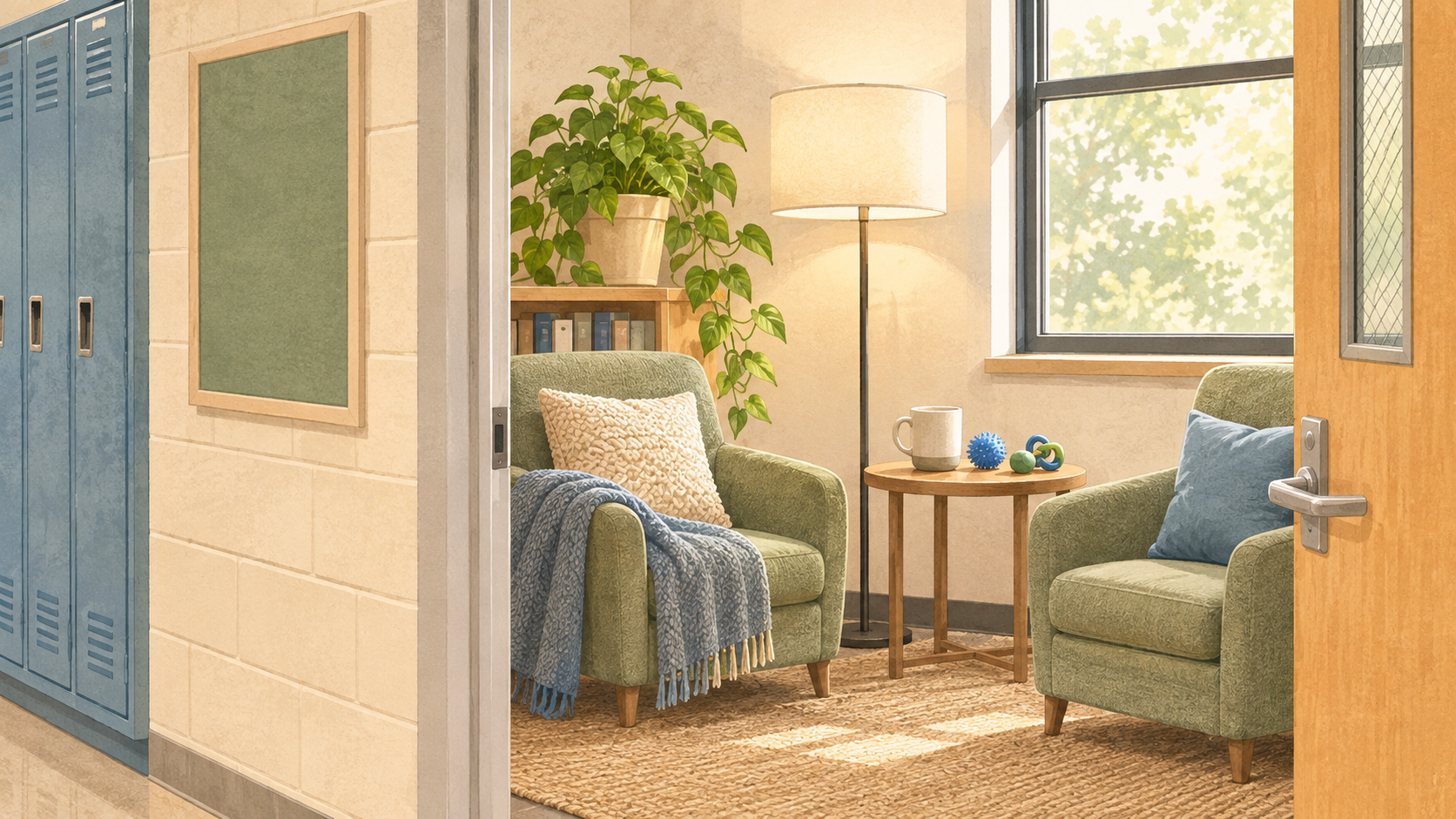
Breakroom, well-being space, Zen Dens, Rejuvenation Rooms. Whatever you might choose to call it, creating a designated space for staff to take care of their own well-being can be an effective way to show hardworking school staff and teachers they’re valued and appreciated, which decreases staff stress and contributes to a positive school culture.
In a 2025 pilot program, our results demonstrated that 86% of well-being space users reported stress relief. And, staff who used rooms regularly experienced greater stress reduction. Maybe more impressively, 98% said rooms positively contributed to school culture.
One educator told us that it “Lifts the mood to see such a comfortable place and know that our district administrators and community members care enough to provide such a nice place for staff.”
Well-being spaces can be done inexpensively, and effectively, but they do have pitfalls. When I asked one educator in a district that was working to create these in every school, she said very frankly, “yes, I know about that room. We all go there to complain.”
I assure you, this was not the intention of the district or the school leadership.
With a long history of supporting school districts in creating spaces for staff, we’ve learned a few things along the way. Here are 5 lessons learned (and pitfalls to avoid).
- Location, location, location
School sites often have limited space. You can get creative with how you carve out a quiet and/or collaborative space for educators to recharge or connect; but, it’s important to consider what might impede usage. Behind a principal’s office or through someone’s classroom is going to make it physically or psychologically hard to get to. Any place that takes longer to walk to and from than the time they will have in the room will just not get used.
- Nothing for them, without them
One school I worked with put in exercise equipment that immediately got dusty and sat unused. Educators at that school didn’t want to workout midday, they wanted a place to sit and decompress. A couch, beanbag chair, soft lighting and some stress-relief fidgets was what they really wanted. Well-intentioned gym equipment was expensive and unnecessary. Alternatively, I’ve heard educators rave about getting an ice machine.
- You can build it, but they might not come
You can have a beautiful and welcoming space, but it’s no good if no one knows it’s there, or when or how to use it. Consider how to communicate about your space (and you will have to often and routinely). If your staff doesn’t have a minute to sit down, they won’t use it either. Consider how schedules might be shifted to allow brief moments to reset. And clearly outline how the room can be used (to quietly relax) and not used (to meet with students or caregivers).
- Walk the walk (figuratively)
If school and district leaders are never seen taking time to self-regulate, teachers and staff will not feel like they can either. Maybe you have a different work-life rhythm, or want to preserve the space as a leader-free zone, but clearly articulate that to your staff and ensure they feel the psychological safety to use the space, and publicly share or model how you are caring for yourself too.
- The space won’t maintain itself
The final pitfall we see the most is failing to have a plan for upkeep. If you get a pod-based coffee pot (these are very popular in these spaces!) do you have a plan for who and how it will get emptied and coffee replenished? Do you have a wellness committee or other willing volunteers to periodically make sure it’s not becoming a storage room or supply/furniture dumping ground? Plan for how this room will continue to be a clean and welcoming environment.
At their best, staff well-being spaces are more than rooms. They’re visible reminders that educators matter and that taking care of yourself at work is supported, not discouraged. When thoughtfully designed and maintained, these spaces can become small but powerful investments in a healthier school culture. Get more tips and resources for creating a well-being space or general well-being guidance.
Have your own lesson learned or tip for creating a space to help teachers and staff thrive? We want to know! Share your tips and best practices on X (thrivingschools) or contact us directly!